ServicesRoof Inspections
Roof Inspections in Crooksville
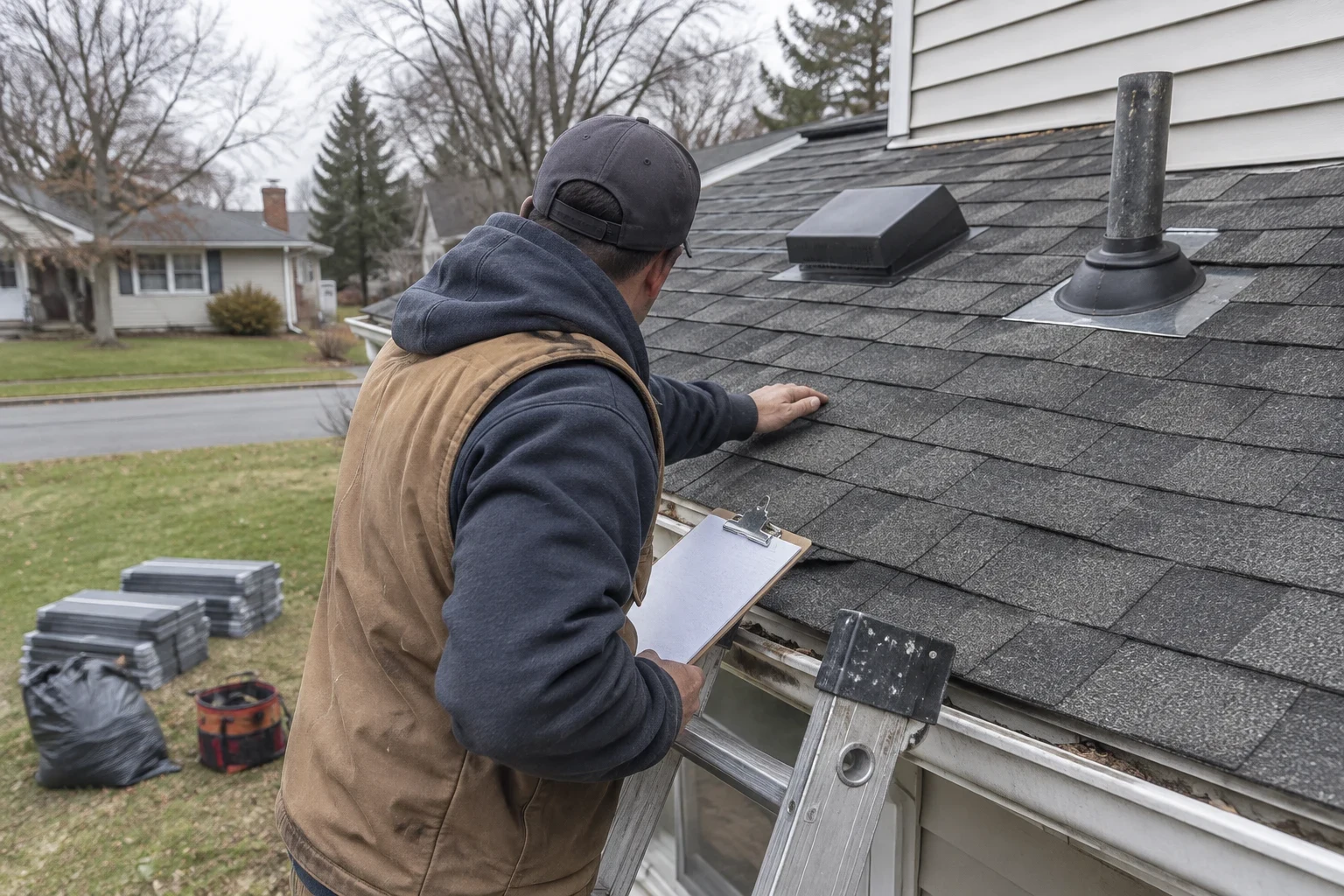
We look over your roof from the shingles down to the attic and take photos as we go. Afterward we go through each finding with you in plain terms: what it is, how soon it matters and what your choices are. What happens next is your call.
Why a close look at your roof pays off
Your roof keeps water out in layers, and an inspection checks each one in turn. We start with the shingles you can see from the street, then move to the flashing, vents, sealant, decking and the attic underneath. Leaks rarely begin as anything dramatic. Finding them early usually keeps the fix small.
Most homeowners call us before a sale or purchase, after a tough winter, when a mark shows up on a ceiling, or when the roof is getting older and they want a straight assessment. Ohio's freeze-thaw cycles force water into tiny gaps and open them wider over a season, so we spend extra time on joints and seams.
We write the report for you to read, not for another contractor. Every finding comes with a photo and a short explanation, plus a clear answer: roof repair now, fine to wait, or a sign that a roof replacement belongs in your plans for the coming years.
What we check on every inspection
- Shingle condition
- We look for lifted, cracked or curling shingles and for granule loss, which shows up as bare, dark patches. Granules shield the asphalt from sunlight, so heavy loss tells us how much life the roof has left.
- Flashing and penetrations
- Chimneys, skylights, plumbing vents and wall joints are where most leaks begin. We check the metal flashing, the step flashing along walls, and the rubber boots around vent pipes, which tend to crack with age.
- Attic and roof deck
- With a flashlight in the attic, we check for pinpoints of light, water marks, damp insulation and sheathing that has gone soft or dark. In winter, frost on the underside of the deck usually points to ventilation trouble.
- Ventilation and ice dam risk
- We note intake and exhaust vents and whether air can move freely from the soffits to the ridge. Poor airflow warms the deck, melts snow unevenly and sets up ice dams at the eaves.
- Gutters, soffit and fascia
- We check that gutters are pitched, attached and draining, and that the soffit and fascia behind them are sound. Rot here often traces back to overflowing gutters.
When your roof is due for a look
A new stain on the ceiling
Even a faint brown ring tells you water has found a way in. The actual opening is often several feet higher up the slope, so finding it takes a look from both the roof and the attic.
Grit collecting in the gutters
Coarse, sandy granules piling up in gutters or spilling from downspouts are a sign your shingles are losing the coating that protects them from the sun.
Icicles and ice along the edge
Thick icicles or a band of ice at the eaves point to warmth escaping into the roof. Meltwater pools behind that ice and can creep under the shingles.
An older roof nobody has checked
Once a roof reaches about 15 years and has never had a close look, an inspection sets a baseline and gives you time to plan.
A home sale on the horizon
A clear record of the roof, with photos, helps buyer and seller both see what they are agreeing to.
What happens during your inspection
- 1
A quick phone conversation
Let us know what prompted the call, whether it is a drip, a missing shingle or just the roof's age. We settle on a day and mention whether we will need attic access.
- 2
Up on the roof
We walk the surface wherever footing is safe and check the rest from a ladder at the eaves. We are insured and bonded, and we step with care so your shingles are not scuffed or loosened.
- 3
Up in the attic
With your okay, we look at the underside of the deck, the insulation and the vents. We work neatly and leave the space the way it was.
- 4
Talking through the findings
We go over the photos with you one by one and group them three ways: items to fix soon, items to watch over time, and items in sound shape. No work is scheduled unless you ask for it.
What an inspection costs depends on
You are mainly paying for careful time spent on the roof and in the attic, so the price follows how long a thorough look takes at your home. We give you the cost over the phone before booking, so nothing surprises you later. If you choose to have work done afterward, that estimate is written up on its own, line by line.
- Roof size and shape
- A simple two-sided gable goes quickly. Each extra valley, dormer or roof plane adds seams and flashing to check.
- Pitch and access
- Steeper roofs need more safety setup. On some, we see more from a ladder at the eaves or through zoomed photos taken from the ground.
- Attic access
- An open attic with a simple hatch is quick. Tight crawl spaces or areas sealed behind drywall lengthen the visit.
- Why you need the report
- A routine condition check is the lighter job. A report for a home sale documents more of the roof in writing and takes more time to prepare.
Questions people ask about inspections
Something not covered here? (740) 883-3885
How much time does an inspection take?
Expect about an hour at your home, somewhat longer for a big or steep roof. Going over the photos and notes with you takes a little extra time at the end. You do not need to climb up with us, but an open, reachable attic hatch speeds things along.
Is the inspection a sales pitch for a new roof?
No. Many inspections wrap up with a couple of minor fixes or nothing needed at all. If replacement is worth considering, we show you the photos that back up that view and give you an honest idea of how much time you have to plan.
How often should I have my roof checked?
For most homes, once every year or two works well, plus a look after a rough winter. Older roofs, or ones with a history of leaks, deserve more frequent checks.
What if you find something wrong?
We show you exactly where it is and go over your options, from a simple roof repair to keeping an eye on it for a season. If you have us replace the roof, it comes with lifetime material warranties and a 10-year workmanship warranty, and we explain what each one covers.
Will you inspect a roof outside Crooksville?
Yes. We also cover nearby towns including New Lexington, Zanesville and Lancaster. The complete list is on our Service Areas page.
Know exactly where your roof stands
A phone call is all it takes to set up an inspection. We will ask a few questions, find a time that works, and tell you what you will receive afterward.