ServicesGutters
Gutters and Downspouts in Crooksville
Every rainstorm ends up somewhere: against your foundation, streaking down your walls, or out in the yard where it does no harm. We size, hang and slope each gutter run with care, and we explain every choice in plain terms before any work begins.
Where your roof water should go
Even a modest roof gathers hundreds of gallons in a steady rain. Left to fall from the eaves, that water splashes mud up the walls, soaks the soil beside the foundation and works its way toward the basement. A working gutter system catches it, sends it to a handful of downspouts and lets it out where the ground can absorb it.
When gutters fail, the reasons are usually simple. The profile is too small for the roof feeding it, the slope is too flat and water sits, hangers have worked loose, or a downspout empties right against the house. Freeze and thaw make each of these worse, because standing water becomes a heavy ridge of ice that drags the gutter off the fascia.
Some gutters just need to be rehung and resealed. Others have reached the point where a full replacement is the better value. We explain which applies to your home and the reasons behind it.
What goes into our gutter installations
- A gutter size matched to the roof
- Before choosing 5-inch or 6-inch gutters, we measure how much roof drains to each wall and how steep it is. Large or steep planes often call for the bigger profile, and we show you why.
- One-piece aluminum runs formed on site
- We roll each gutter from a coil at your home, cut to the full length of the wall. Joints end up only at corners and outlets, which leaves far fewer spots that can drip.
- Hidden hangers spaced for winter loads
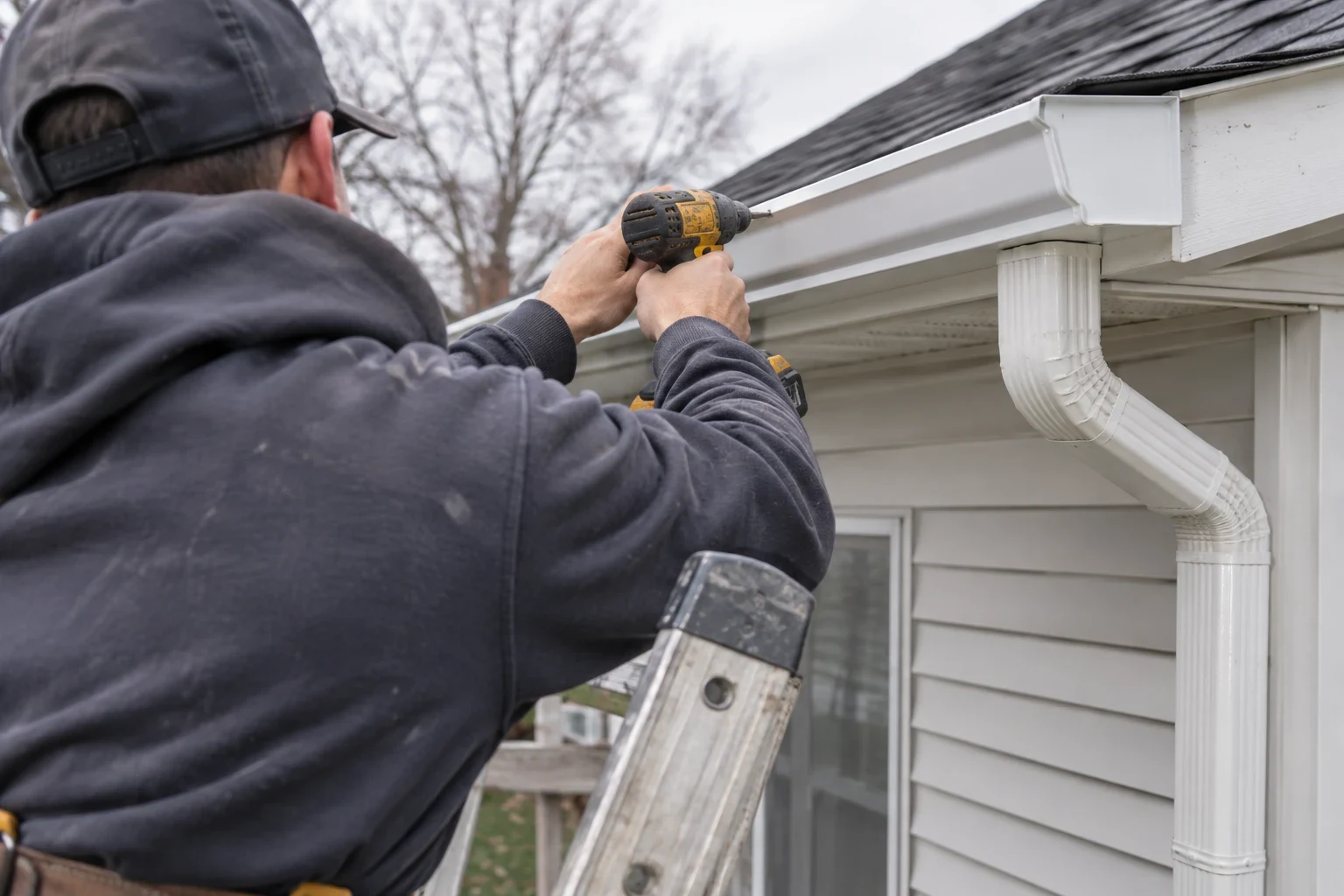
- Screw-in hidden hangers hold the gutter from inside, set close together so the run can carry wet snow and ice. They grip much better over the years than old spikes and ferrules, which tend to back out.
- A steady slope to each outlet
- We set a gentle, even fall toward every downspout. Enough to empty the gutter completely, not so much that the line looks off from the curb.
- Downspouts that carry water clear
- Outlets go where the water can be led away sensibly, with elbows or extensions so it lands well out from the foundation. Larger 3x4 downspouts are available for roofs that send a lot of water to one corner.
- Fascia checked before anything is hung
- The gutter is only as sound as the board behind it. If that fascia is soft or rotted, we show you first, and our soffit and fascia work can take care of it.
Signs your gutters are due for a closer look
Overflow in a normal rain
When water pours over the outer lip during an everyday shower, the gutter is blocked, sagging or simply too small for the roof above it.
Dips and gaps along the run
A low spot between hangers collects water, the added weight pulls it lower, and the cycle repeats. A gap behind the gutter lets water run straight down the fascia.
Steady drips at joints
Seam sealant dries out and cracks with age. Corners and joints that drip after every rain usually point to older sectional gutters nearing the end.
Streaks, peeling paint or soft trim
Dark lines below the gutter or fascia that gives under your thumb mean water has been getting behind the system for some time.
Wet basement walls or eroded beds
Puddling, washed-out mulch or a damp basement along one side of your home often leads back to a downspout that stops too close to the foundation.
How your gutter project unfolds
- 1
We look over the whole system
We walk around your home and check every run, outlet and stretch of fascia, photographing what we find and noting where water lands now. Then we explain what we saw in everyday language.
- 2
You get a written, itemized estimate
We talk your quote through by phone and leave it with you in writing, broken out into gutter footage, downspouts, any fascia repair and removal of the old gutters. Upgrades such as 6-inch gutters or guards are listed separately so you can weigh each one.
- 3
Installation day
Most homes are finished in a single day. We remove the old gutters, check the fascia, form the new runs on site, then hang them, set the slope and fasten the downspouts.
- 4
Water test and cleanup
Before we pack up, we run a hose at the upper end of every gutter and confirm the flow drains out through its downspout without pooling. We collect old metal, screws and trimmings from your beds and lawn, then walk the finished work with you.
What moves the price of new gutters
A gutter estimate is mostly built from three things: the footage your home needs, the height of the eaves it hangs from, and any repair the fascia needs before new metal goes up. Each of those sits on its own line of our estimate, so you can see where the money goes. We keep dollar figures off this page because two similar-looking homes can call for quite different work.
- Linear feet and corner count
- Longer walls use more aluminum, and each inside or outside corner means a mitered joint that has to be cut, fitted and sealed by hand.
- Profile and metal thickness
- A 6-inch profile or a heavier-gauge aluminum costs more than a standard 5-inch run. Where a roof plane is large or steep, that added capacity usually pays for itself.
- Height and access
- Two- and three-story walls, sloping yards and tight side passages need taller ladders, more setup and slower, more careful work, and that labor is reflected in the price.
- The fascia behind the gutter
- When the board the gutter fastens to has gone soft, it gets replaced first. That repair is listed separately so you can see exactly what it adds.
- Extra downspouts, extensions and guards
- More outlets, longer discharge runs and gutter guards are each priced on their own. We suggest them only where they solve a problem we can show you.
Common gutter questions from homeowners
Something not covered here? (740) 883-3885
Should my roof have 5-inch or 6-inch gutters?
Your roof decides it: how much area of each plane drains toward a wall, and how steep it is. Many average roofs do fine with 5-inch gutters. A 6-inch profile handles about half again as much water, which matters on large or steep planes and below valleys that send rain down in one stream. We measure before recommending, and we will tell you if the smaller size will do.
Are gutter guards worth having?
They earn their keep when trees hang over the roof and shed leaves, seeds and twigs into the gutters. Every guard still needs some care, because fine grit and pollen can collect on top. We explain the main kinds and the upkeep each one asks for, and if your gutters seldom clog, we may suggest skipping them.
Do new gutters come with a warranty?
They do. The gutter materials we put up carry lifetime material warranties, and our installation is backed by a 10-year workmanship warranty. If a hanger or joint we installed works loose, we return and fix it. We are also insured and bonded while working at your home.
Could you fix a single leaking spot rather than replace the whole system?
In many cases, yes. A loose or sagging run can be rehung, re-pitched and resealed. But when older sectional gutters leak at one joint after another, patching one spot tends to shift the drip a few feet down the line, and we will say so before you spend anything.
How do the gutters and roof work as a pair?
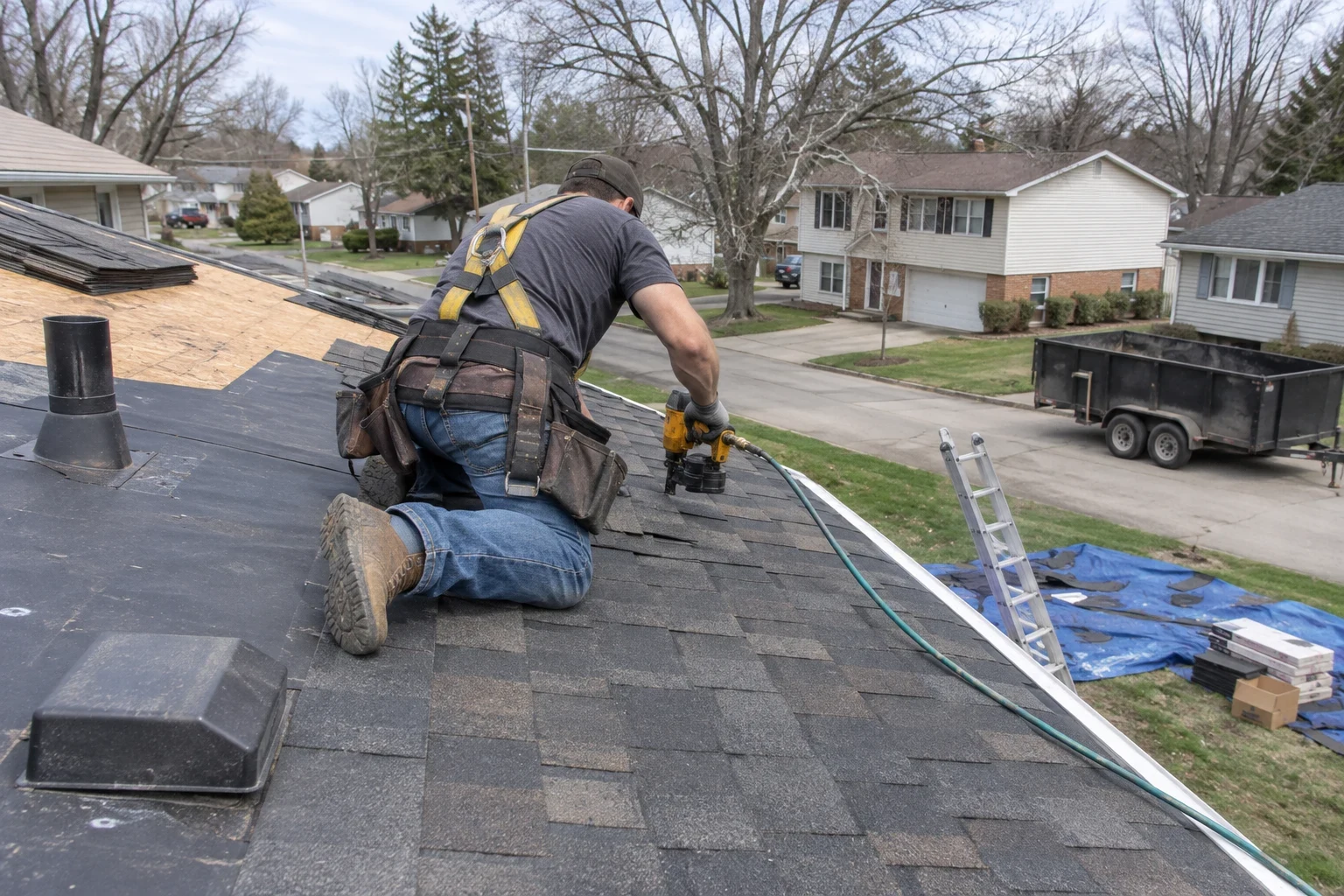
Water should leave the shingles, pass over a drip edge and drop right into the gutter, never slip behind it onto the fascia. If we spot worn shingles or flashing near the eaves while we are up there, we take photos and show you, and you decide if roof repair is worth a closer look.
Get water moving the right way
Tell us what you are seeing when it rains, and we will explain what is likely happening and what your options are before anyone climbs a ladder.